
From Fibre to Fabric: Understanding the Journey of a Textile
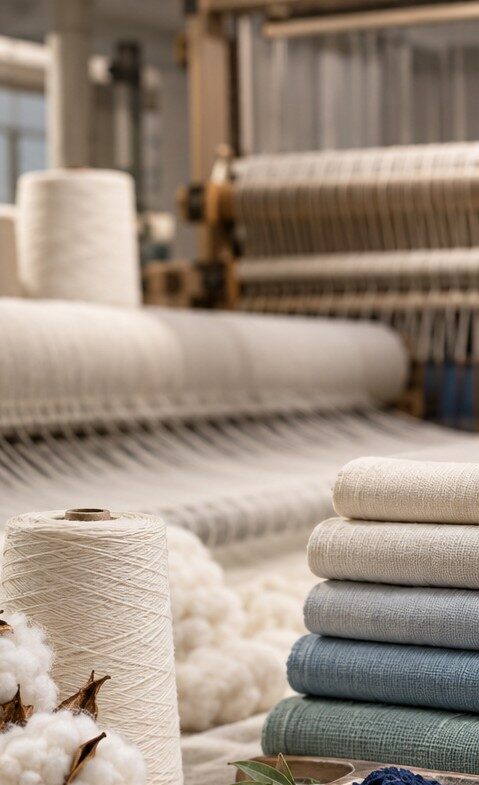
Before a fabric becomes a shirt, dress, jacket or collection, it begins with something much simpler: a fibre.
The journey from fibre to finished textile involves a series of carefully connected processes. Fibre selection, yarn formation, weaving or knitting, dyeing and finishing all contribute to the character of the final fabric.
Understanding this journey gives us a deeper appreciation of the textiles we use every day.
Where It Begins: The Fibre
Every textile starts with a fibre.
Natural fibres such as cotton and flax originate from plants. Other fibres are produced through different manufacturing processes.
The characteristics of the original fibre influence the possibilities of the final textile, but they are only the beginning.
Length, strength, fineness and other properties can affect how a fibre performs during subsequent stages.
From Fibre to Yarn
Fibres are transformed into yarn before they can be woven or knitted into fabric.
Spinning brings individual fibres together and creates a continuous yarn.
The characteristics of the yarn can significantly influence the appearance and feel of the finished textile.
Different yarn structures can produce differences in:
- Surface texture
- Strength
- Softness
- Thickness
- Appearance
- Drape
This is one reason why fabrics made from the same fibre can look and feel remarkably different.
Creating the Fabric
Once yarn has been produced, it can be transformed into fabric through processes such as weaving or knitting.
Weaving interlaces yarns to create a structured textile. Different weave constructions can produce fabrics with different levels of strength, texture, weight and drape.
Knitting creates interconnected loops, resulting in fabrics that often offer greater flexibility and stretch.
The construction chosen depends on the intended purpose of the textile.
The Importance of Dyeing
Colour can transform the visual identity of a fabric.
Dyeing involves applying colour to the textile at an appropriate stage of production. The process and method can vary depending on the fibre, fabric construction and desired result.
Consistency is particularly important when producing fabrics for commercial collections, where colour needs to remain reliable across production.
Finishing the Fabric
Finishing is where additional characteristics can be developed or enhanced.
Depending on the textile, finishing processes may influence softness, appearance, texture, handle and performance.
A fabric’s final character is therefore the result of many decisions rather than one single process.
What Makes a Fabric Premium?
Premium fabric is not defined by one characteristic alone.
It can be the result of careful attention across the entire textile journey:
Fibre → Yarn → Construction → Dyeing → Finishing → Quality
Consistency is particularly important.
A textile intended for a fashion collection must not only look appealing but also provide reliable performance across production.
The Human Element
Although modern textile production uses sophisticated machinery and technology, craftsmanship and expertise remain important.
Understanding fibres, yarns, construction and finishing requires knowledge developed through experience.
Small decisions throughout production can influence the final result.
The SKPL Approach
At SKPL, fabric is viewed as a complete journey rather than simply a finished surface.
From the selection of fibres to the development of fabric constructions and finishes, every stage contributes to the textile’s identity.
This perspective allows us to explore fabrics not only for how they look, but also for how they feel, move and perform.
Because every fabric has a story.
And that story begins long before the finished garment.