
Cotton vs. Linen: Understanding the Difference
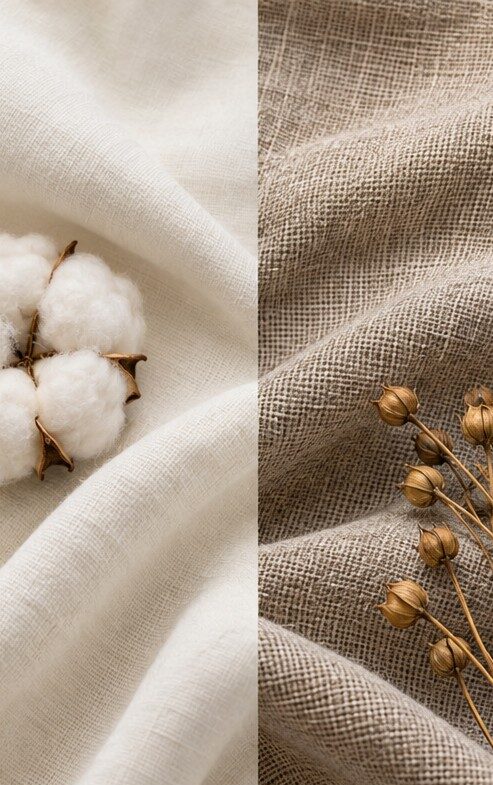
Cotton and linen are two of the most recognised natural fibres in the textile world. Both are breathable, versatile and widely used across fashion and apparel, yet each has a distinct personality.
Understanding their differences can help designers and brands select the right textile for a particular garment, season or aesthetic.
What Is Cotton?
Cotton is a natural fibre derived from the cotton plant.
Its softness, versatility and adaptability have made it one of the most widely used fibres in apparel. Depending on yarn, weave and finishing, cotton can take on many different characteristics.
It can be crisp and structured, soft and lightweight, textured or smooth.
This versatility makes cotton suitable for a wide range of applications, from shirts and dresses to trousers, casualwear and everyday essentials.
What Is Linen?
Linen is produced from the fibres of the flax plant.
One of its defining characteristics is its natural texture. Unlike extremely smooth textiles, linen often carries subtle variations in its surface that give it a distinctive visual and tactile quality.
It is also known for its breathability, making it particularly popular in warm-weather apparel.
Linen’s natural character often works beautifully with relaxed silhouettes and understated designs.
Texture and Hand Feel
Cotton can offer a broad range of hand feels depending on its construction.
A fine cotton can feel smooth and delicate, while a heavier cotton can provide greater structure and substance.
Linen typically has a more textured hand feel. This texture is part of its appeal and contributes to the relaxed character associated with linen garments.
Breathability and Comfort
Both cotton and linen are valued for their suitability in warm climates.
Cotton is naturally breathable and comfortable against the skin, while linen’s structure allows air to move easily through the fabric.
For summer collections, both can provide excellent foundations, depending on the desired weight, construction and final garment.
Durability
The performance of a textile depends on more than the fibre itself. Yarn quality, weave construction, finishing and garment manufacturing all influence durability.
Both cotton and linen can produce long-lasting textiles when appropriately constructed and cared for.
The choice therefore comes down to the characteristics required by the final product.
Cotton-Linen Blends
What happens when the characteristics of cotton and linen are brought together?
Cotton-linen blends can provide an interesting balance between the two fibres.
The cotton component can contribute softness and familiarity, while linen can introduce texture and a distinctive natural appearance.
This combination can work particularly well for contemporary apparel where comfort and visual character are equally important.
Which One Should You Choose?
There is no single answer.
The right textile depends on the design objective.
Choose cotton when you want:
- Versatility
- Softness
- A wide range of constructions
- Everyday comfort
- Different levels of structure
Consider linen when you want:
- Natural texture
- A relaxed appearance
- Breathability
- A distinctive surface character
- Lightweight summer appeal
Consider cotton-linen when you want:
- A balance between softness and texture
- Natural-looking fabric
- Versatility
- A relaxed yet refined aesthetic
Beyond the Fibre
A textile should never be judged by fibre content alone.
The yarn, weave, weight, finishing and construction all contribute to the final fabric. These details determine how the textile looks, feels and behaves.
At SKPL, this understanding is central to exploring textiles.
Because premium fabric is not simply about what it is made from. It is about how every element comes together.